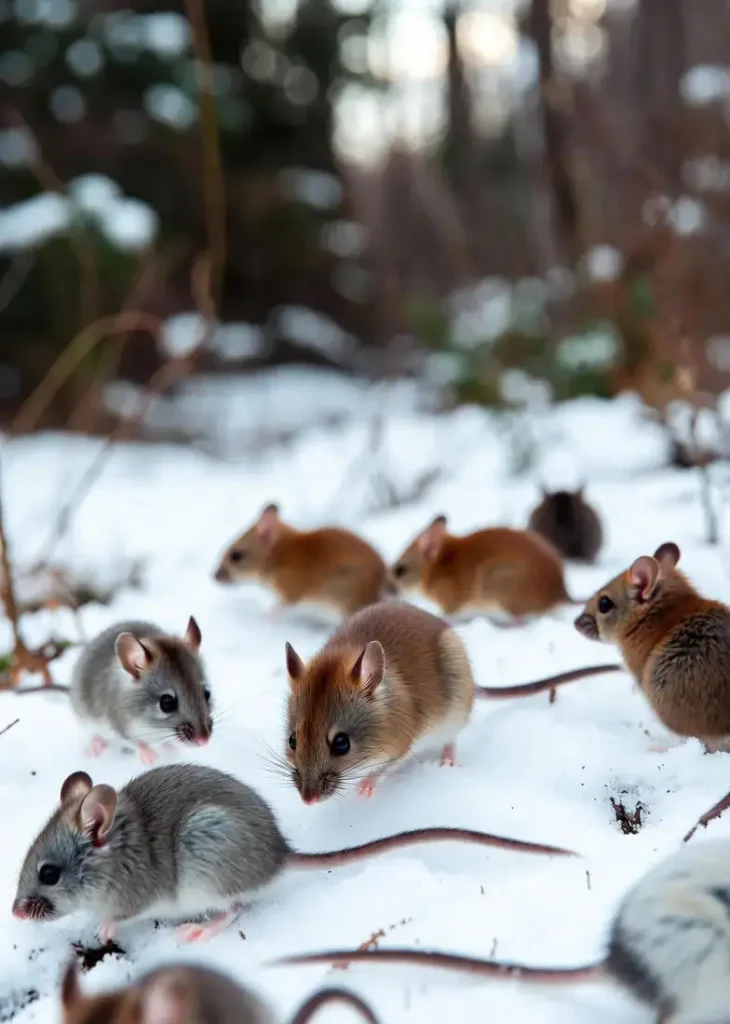
Michigan winters bring more than snow and cold — they also bring an increase in rodent activity. Homeowners often notice tiny footprints in the snow, chewed plants, or droppings near dog runs. While mice are small, they can carry bacteria and parasites, making them a health concern for pets and families alike. Understanding why mice appear in winter and how to prevent them is key to keeping your yard safe.
Why Mice Are Active in winter
During cold months, natural food sources like seeds, nuts, and insects are limited. Mice move closer to homes, sheds, and yards in search of warmth and sustenance. Outdoor dog food, compost piles, and scattered birdseed are magnets for these rodents. Dense mulch beds and shrubs provide shelter from wind and snow, making them ideal winter habitats for mice.
Unlike raccoons or squirrels, mice are small, quiet, and prolific. They often go unnoticed until droppings or gnaw marks appear, which is why preventive measures are so important.
Health Risks for Dogs
Mouse droppings and urine can carry bacteria and parasites. While occasional sniffing may not harm your dog, repeated exposure or ingestion increases the risk of:
- Leptospirosis
- Salmonella
- Worms and other parasites
Mice can also bring fleas and ticks into your yard, creating secondary health risks. Maintaining a clean environment for your dog is essential during winter. This is another great reason for pet waste removal.
Signs You May Have a Mouse Problem
Watch for these common indicators:
- Small droppings near dog runs, patios, or under shrubs
- Gnawed wood, plastic, or wiring
- Tiny footprints in snow along fences or mulch beds
- Scratching or rustling noises at night
Early detection allows for faster intervention, keeping your pets and yard safer.
How to Keep Mice Away From Your Yard
1. Remove Food Sources
Secure garbage bins, compost piles, and dog food containers. Sweep up seeds from under bird feeders and clean patios regularly. Even small crumbs can attract rodents.
2. Secure Shelters
Trim dense shrubs and move mulch away from areas mice might hide. Installing small mesh barriers under decks or around fences blocks access to potential nesting sites. Mice can squeeze through tiny openings, so careful inspection is important.
3. Use Pet-Safe Repellents
Peppermint oil, crushed cloves, or commercial natural repellents can discourage mice without harming dogs. Avoid rodenticides or poisons, which can be hazardous to pets.
4. Maintain Dog Areas
Remove pet waste promptly, clear debris, and keep snow or ice from building up in dog runs. Clean spaces are less attractive to rodents seeking shelter or food.
5. Mulch Management
Mulch provides insulation, which mice love. Keep mulch a few inches away from dog areas, and inspect regularly for signs of nesting.
Guides That Can Help in Your Yard
For additional seasonal yard care tips, check out these guides:
- Garden Mulching
These resources provide actionable strategies for keeping your Michigan yard safe year-round.
Seasonal Yard Maintenance Tips to Reduce Winter Mouse Activity
While mice are persistent during winter, homeowners can take proactive steps beyond basic cleaning to reduce their presence. Regularly inspecting your yard for hidden nests or debris piles can make a big difference. Fallen leaves, stacked firewood, and cluttered garden tools create ideal hiding spots for rodents. Moving or neatly organizing these materials not only makes your yard safer for pets but also minimizes areas where mice can shelter.
Consider adjusting your landscaping to create less hospitable conditions for mice. For example, leaving a small gap between mulch beds and fences or trimming lower tree branches can reduce the sheltered areas rodents seek. Additionally, maintaining a clean and dry dog run or outdoor kennel is crucial. Moisture attracts insects, which in turn attract mice. Keeping areas dry and free of food scraps or standing water reduces the overall appeal to rodents.
Additionally, integrate your pest prevention strategies with your seasonal yard care. Winter is an excellent time to plan and implement preventative measures that will carry through spring and beyond. By combining proper sanitation, habitat reduction, and professional guidance, Michigan homeowners can minimize mouse activity, protect their pets, and maintain a healthier, cleaner yard all winter long.
When to Call for Professional Help
If you notice persistent mouse activity in your home, droppings, or nesting near dog areas, professional intervention is the safest option. Winter yard cleanup specialists can:
- Remove droppings and sanitize affected areas safely
- Eliminate nesting zones in mulch, shrubs, and debris
- Set up preventative barriers for winter and spring
- Recommend pet-safe rodent deterrents
Final Insight for Mice
By following these strategies, keeping dog areas clean, and calling professionals when necessary, Michigan homeowners can protect their yards and pets from winter mouse activity. Using both preventative measures and expert assistance ensures your yard stays healthy and safe all season long.
Protect Your Yard and Pets This Winter
Don’t let mice or droppings threaten your dog’s health or your yard. Get local, pet-safe yard cleanup services before the winter snow piles up.
Call: 313-422-7926
Frequently Asked Questions: Winter Mice in Your Yard
Mouse droppings and urine can carry bacteria and parasites. Occasional contact is usually low-risk, but repeated exposure can cause health issues for dogs. Keep areas clean and monitor your pets.
Yes, mice can enter homes if outdoor food sources are limited or gaps exist. Seal any holes, cracks, and potential entry points to prevent infestations.
Remove all food sources, maintain a clean yard, use pet-safe repellents, and install physical barriers like mesh or gravel around dog areas to prevent mice from nesting.
No. Rodenticides can be extremely dangerous for pets. Use pet-safe deterrents, barriers, and professional cleanup services instead.
Yes, mulch can provide warmth and shelter. Keep mulch a few inches away from dog areas and inspect it regularly to ensure mice aren’t nesting there.
If you notice frequent droppings, nesting signs, or mouse activity near your dog’s area, a professional winter yard cleanup ensures safe removal and long-term prevention.