
Need Help With November Leaf Cleanup?
Don’t let piles of wet leaves cover your grass before winter. Get help clearing leaf buildup, cleaning up lawn edges, and getting your yard looking neat for the colder months.
Take care of your lawn now and avoid leaving a big cleanup project for spring.
Call Today: 855-316-9164Keeping your lawn, thick and green in the fall isn’t just about mowing one last time before winter. It’s about knowing how to remove leaves, which ones to mulch, and when your grass actually needs another cut.
For Michigan homeowners, the combination manners. Cool, seasoned grass, such as Kentucky bluegrass, parental rye grass., And fescue can continue to grow well into the fall, but heavy leaf buildup, soggy soil, and mowing Too short can leave your yard struggling when spring arrives.
The best approach is to remove heavy leaf piles first, mulch, thin layers of dry leaves when possible, and mow only when the grass is dry enough and still needs cutting. The routine helps sunlight reached the turf, reduces leaf buildup, and gives your lawn a better chance of entering winter in good condition.
You don’t need to spend every weekend raking or turning fall leaf cleanup into a major project. With a simple sequence, you can get the job done efficiently without sacrificing in your lawn health.
Why should you combine raking and mowing instead of choosing one?
Raking and mowing can serve different purposes, and using them together gives you more control over how your lawn looks and performs.
Raking removes the material so that the mower doesn’t struggle to handle. Mowing cuts the grass to an appropriate height and can shred small amounts of the remaining leaves into pieces that break down naturally. I want to mention also that mowing your grass sure helps pick up the dog poop so you’re not scraping dog poop into the grass if you are a pet owner.
The mistake is assuming your mower can handle every leaf and falls.
A thin scattering of dry leaves might disappear under a mulching mower. A thick layer of wet, maple leaves, on the other hand, can form a dense block, white and leaves clump up, scattering across your lawn.
Here’s why combining both methods work better:
- Raking removes excess debris before it smothers the grass
- Mulching returns fine chopped leaves to the lawn when coverage is light enough
- Mowing maintain inappropriate grass height as growth slows towards the winter
- If final inspection catches leftover clumps that could otherwise remain on the lawn for weeks
When it comes to your mind, the goal isn’t to leave your yard completely. It is the maintain the man where the grass remains visible and isn’t buried beneath excessive organic material.
What’s the right order for raking and mowing in the fall?
For most Michigan lawns, the most effective sequence is to inspect the yard, rake, heavy leaf buildup, mulch, or collect the remaining leaves and then mow if necessary.
However, the exact order depends on how much debris has accumulated, and whether the leaves are wet or dry.
Check the lawn before pulling out your equipment
Walk around your property and look at the condition of both the grass and the leaves.
Are the leaves dry or separated evenly? Are there thick piles under your trees? Is the ground soft after a recent rain? Does the grass need to be cut?
These details will determine what you should do next.
If the ground is exaggerated, give it time to dry. Mowing a soft soil can create rods, compact the ground, and damage the turf.
Also, removing sticks, branches and other objects can help remove hazards for your lawnmower.
Rake areas where leaves are building up
Start with a trouble spot rather than automatically raking every square foot of your property.
Common leaf collection areas include:
- Beneath shaded large trees
- Along the fence or property barriers
- Around sheds, decks, and landscaping beds
- In low areas, where when deposits leaves
- Along the edge of the house and garage
Use a leaf or rake, friendly collection of tools to get the thick piles without aggressively scraping the grass.
This will help. Also, if you pick up the dog poop within a couple of hours of your dog going to the bathroom so that the poop doesn’t get saturated into the lawn and you have to aggressively scrape the grass.
The first pass makes the remaining lawn much easier to mow and help you prevent the mower from spreading large clumps of debris across the yard. One thing I want to also mention is that you have debris on the mower deck you want to clean off the mower deck before mowing your lawn.
Decide whether to mulch or collect the remaining leaves
Once the heavy buildup of leaves are gone, look for leaves that are scared across your grass.
If they’re dry and generally distributed, a multi mower can chop them into a smaller pieces. Those fragments congratulate decompose and remain organic manner to the soil.
But don’t confuse mulching with simply running over the leaves and leaving them wherever they land.
If the mower leaves visible clumps or grass disappears beneath the chopping material, there is too much debris remaining. Rake up what is remaining on the lawn.
Here is a simple rule to use: after mowing, you should be able to see grass clearly through the chopped leaves.
Mowing only if the grass needs it
Once you’ve handled the heavy leaves, determined whether the lawn needs to be cut.
Fall grass continues to grow while temperatures remain favorable. If your lawn has grown noticeably taller, a final mowing can help maintain an appropriate health for dormancy.
Avoiding mowing just because you’ve finished raking, if the grass is already a suitable height, leave it alone.
For many Michigan cool season lines, a mowing height of 2 1/2 to 3 1/2 inches is reasonable and in a general range during the growing season, depending on the grass type and lawn conditions.
You don’t wanna scalp your lawn to make winter cleanup easier. Removing too much sleep tissue at once, can weaken the grass and expose the soil.
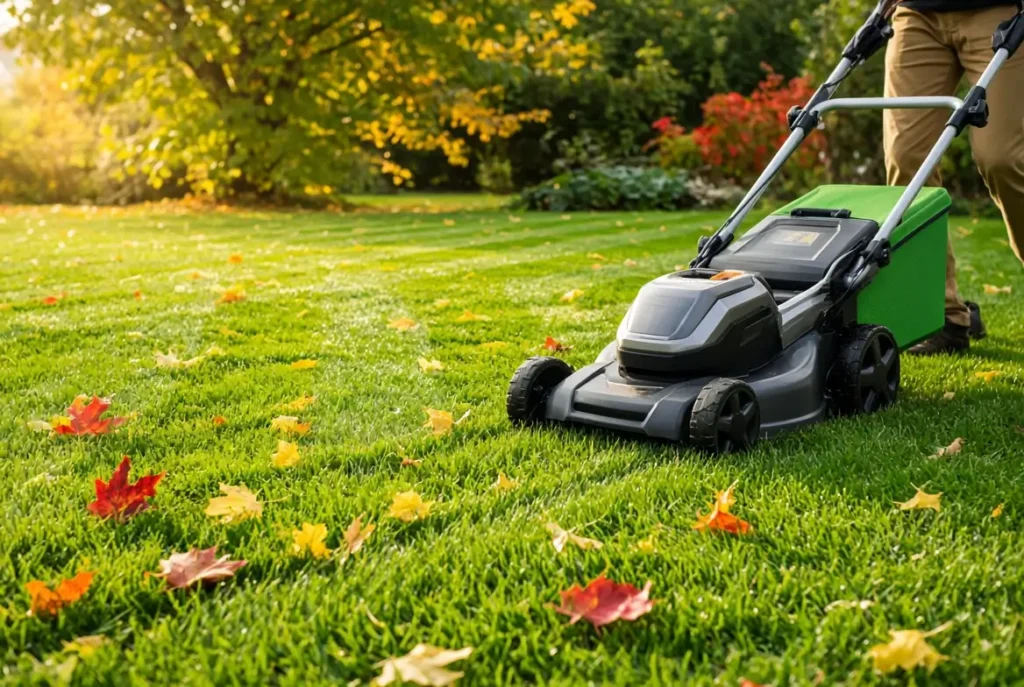
Make one final pass around the property
After mowing, you want to inspect the lawn from every angle you can.
You want to look at piles of chopped leaves near trees, clumps left by the mower, and spots that the grass remains covered.
Rake or collect anything excessive. The mower has left wet clumps, don’t assume that they’ll disappear on their own.
The final pass is what separates along that merely looks mode from ones that properly I prepare prepared for winter.
When is A Better better to rake instead of mulch?
Mulching is convenient, but at times you want to rake and collect the leaves and that’s a smarter option.
Mulch, when leaf coverage is light
If you can still see most of the grass and the leaves are dry enough to chop cleanly, mulching can save you time. Make sure the mower distributes the The fragments evenly without leaving piles
Rake when leaves form a thicker layer
Have coverage black sunlight, and can smother the turf. Gather the bulk of the leaves before mowing rather than forcing them more to process everything at once.
Wait until the lawn is wet
Wet leaves can tend to stick together and clog up more deck. If you have soggy lawn, postpone mowing and let the surface dry before continuing to clean up.
Remember the tree species always make a difference. Large, broad leaves, may be harder to mulch evenly than small leaves, particularly when they’re wet.
If you have many mature, maple or oaks, you may have to have several cleanup sessions rather than trying to mulch the entire fall leaf drop.
How often should you rake and mow during Michigan’s fall?
There isn’t a schedule that works for every property. A yard that is surrounded by mature trees needs attention more than an open lawn with only a few few scattered leaves.
Instead of following a rigid weekly schedule, use the amount of leaf coverage and graft growth to guide your decision
Here’s a few decision makers
If you leave scattered across the lawn?
Your best approach would be mulch them during a normal mowing if the conditions are dry.
Leaves accumulate under trees?
Rake or collect a concentrated piles.
Grass growing quickly in mild weather?
Mow as needed while maintaining the appropriate height.
Grass is barely growing in late fall?
You want to leave removal and don’t mow unnecessarily.
During peak leaf drop, check your yard every few days if you have heavy tree coverage. You may not need to do a complete cleanup each time, but catching piles early can prevent them from being wet, compact and mats on your lawn, which ultimately will create brown spots on your grass.
Why fall cleanup helps prevent winter problems
It properly maintain fall on A Better position handful the tradition into winter.
Excessive leaf coverage can reduce light that is going to reach your grass and keep your surfaces damp. When those conditions persist, there is an increase of the risk of turf damage and contribute to an environmentally favorable disease for your lawn.
Removing heavy debris helps the grass reach the available light while it’s still growing. Which makes it easier to spot damage problems, thin patches, and other issues that may need to be attended to before the ground freezes.
However, raking and mowing alone cannot 100% guarantee a disease, free lawn. Snow cover, weather conditions, grass, variety, the drainage, the lawn management all play a role.
You can still improve your lawn chances by keeping the grass at an appropriate height, removing thick leaves that Matted, and avoid mowing soil when it’s too wet.
If your lawn regularly develops bare spots or stay saturated during rainfall, consider whether compaction or drainage problems need to be addressed separately.
What about mulching leaves instead of bagging them?
Mulching can be a practical way to reduce yard race while returning organic material to your lawn.
When dry leaves are chopped up in the small pieces, they are settled between the grass blades and gradually decompose. This process helps return some of the nutrients to the soil in an organic fashion. But there’s a limit to how much material your lawn can handle at one time.
If you remove thick layers of leaves, the fragment may pile up rather than saddle in the turf. Large clumps can also block sunlight and create the same problem you’re trying to avoid.
The best approach is to mulch and manageable amounts throughout the season. Collect excessive composite or just use it in suitable garden beds.
If the leaves in the garden beds, keep them away from plant crowns and avoid creating thick or tightly packed layers that traffic excessive moisture.
Common mistakes that you can undo for fall lawn cleanup
Even when you follow the right general routine, if you shortcuts can work against you.
Cutting the grass too short – a close cut doesn’t make your lawnmower winter ready. Maintaining appropriate progress can avoid removing too much at once.
Mowing over leaves – this can often avoid leaves that will clump up and clog or mow. Waiting for a dryer period whenever possible.
Leaving chopped leaves and piles – mulched material should be distributed relatively evenly. Collect excessive fragments if the grass it’s becoming hidden.
Mowing when the ground is soft – equipment can leave ruts and compact the soil. Let the lawn dry up before using any heavy equipment.
Frequently ask questions for your lawn
Should I write leaves before or after mowing the lawn?
Rake heavy leaf piles before you mow. This can help prevent excessive debris from clogging up the mower or being spread in the thick clumps. If a thin layer or dry leaves remain, you can mulch them up during mowing. Checked along after you mow and collect the excessive material.
Is it better to mulch leaves or beg them in the fall?
Both methods can work. Mulching can be useful when the leads are dry, finally chopped and spread evenly throughout your lawn and making it so much that settles into your grass. Begging or collecting is better when the lawn leaves are wet or too abundant for the mower to distribute evenly.
How short should I cut my grass before the winter in Michigan?
It’s best for many cold season lawns to be about 2 inches or 2.5 inches to 3.5 inches that’s reasonable during the growing season. The ideal height depends on the condition and the variety of lawn grass that you have. You don’t wanna scalp your lawn and you don’t wanna move more than 1/3 of the grass blade in a single mowing.
Can leaving leaves on your lawn create snow mold
Heavy, matted leaves contribute to poor airflow and prolonged moisture, but they aren’t the only cause of snow mold. Snow covered, weather conditions, and turf management can also affect disease. Removing excessive leaves and maintaining our appropriate mowing practices can help reduce the stress on your lawn.
Giving your lawn a head start for the spring
A thick, green lawn neck spring starts with a common sense strategy in the fall. You don’t need a break every leaf immediately or mow every time you step outside. You just need to take care of the heavy debris from covering your grass and make smart decisions about when to mulch and want to collect.
Start by removing the largest piles, mulch, the remaining leaves only when the coverage is light, and mow your lawn when it actually needs it. Finish with a crick inspection to catch clumps before they sit on the turf for weeks.
Combining raking with mowing is the right way to help protect your grass through the fall and gives you a better foundation for spring growth. That’s why we do mowing for thick green fall grass.