Let’s cut to the chase—grubs are one of those backyard problems that don’t get talked about enough until they’re already eating your lawn alive. One day you’ve got green grass, and the next you’ve got brown patches that look like a disaster zone. And if you’re a dog owner you’re not just dealing with a dead lawn—you’re dealing with a potential poison situation if you use the wrong grub killer.
So today we’re talking about pet safe grub killer, what works, what doesn’t, and how to protect your yard and your dog without making your yard look like a chemical spill.
Why Grubs Are a Big Deal (Especially If You Have Dogs)
Grubs are the larvae of beetles like Japanese beetles, June bugs, and chafers. They live underground and eat the roots of your grass. When they’re active, your lawn starts to feel spongy and thin. The grass starts dying in patches. And the worst part you don’t even see them until it’s already too late.
Now add dogs to the mix. Dogs love digging. Dogs love sniffing around. Dogs love eating stuff they shouldn’t. So if you use a chemical grub killer, there’s always a chance they could step in it, lick it, or even dig it up. And you don’t want that.
This is why pet safe grub control matters. Because you can’t just treat your lawn like chemistry experiment and hope for the best.
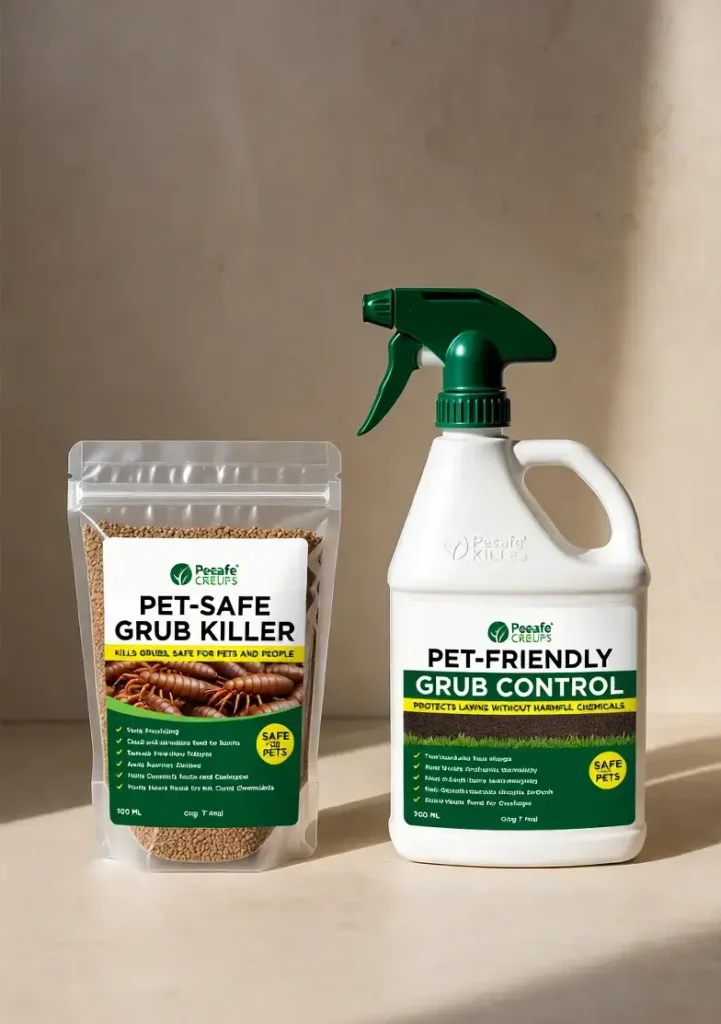
The Problem with Most Grub Killers
A lot of the traditional grub killers are basically “bomb your lawn” products. They’re strong, they work, but they’re not exactly dog-friendly. Some of them are:
- Highly toxic
- Long-lasting
- Bad for pets
- Bad for beneficial insects
- Bad for the environment
And here’s the thing—if you’re a homeowner with dogs, you can’t just spray something and forget about it. You have to be careful about where your dog walks, plays, and rolls. Because the last thing you want is your dog getting sick from a product that was supposed to help your lawn.
What “Pet Safe” Really Means
Let’s clear something up. When a product says “pet safe,” it doesn’t always mean completely safe. It often means “safer than the other options.” That’s still good, but you still need to treat it like you would any chemical.
A pet-safe grub killer is usually:
- Low toxicity
- Limited exposure risk
- Less harmful to pets
- Usually natural or biological
So yeah, it’s safer, but you still need to follow instructions and keep your pets away until it’s dry or absorbed.
Best Pet-Safe Grub Control Options
Here are the best options if you want to treat grubs without risking your dog:
1. Milky Spore
This is a popular pet-safe option. It’s a bacteria that targets grubs and is considered safe for pets and people.
Pros:
- Targets grubs specifically
- Long-term solution
- Works over time
Cons:
- Takes time to work (not instant)
- Works best in certain climates
- Needs proper application
If you’re looking for a long-term solution and not an immediate fix, milky spore is a solid option.
2. Beneficial Nematodes
These are tiny microscopic worms that eat grubs. Yeah, it sounds weird, but it works.
Pros:
- Natural and pet-safe
- Targets grubs directly
- Great for lawns with ongoing grub problems
Cons:
- Must be applied correctly
- Needs proper watering
- Works best in cooler times of the day
If you want the most natural approach, this is it.
3. Grub Control with “Low Toxicity”
There are some chemical grub killers that are safer than others. They’re not “perfectly safe,” but they’re better than the heavy-duty options.
If you choose this route, make sure you:
- Keep dogs off the lawn until it’s dry
- Avoid applying right before rain
- Follow the label instructions exactly
How to Know If You Have Grubs
You don’t always see grubs. But you can tell if your lawn is under attack.
Look for:
- Brown patches in your lawn
- Grass that peels up like carpet
- Birds digging in your yard
- Skunks or raccoons digging around at night
- Soft, spongy spots in your grass
If you’re seeing those signs, you probably have grubs.
The Smart Way to Treat Grubs (Without Risking Your Dog)
Here’s the best way to handle grub control if you have pets:
Step 1: Confirm the Problem
Don’t just assume. Pull up a small patch of grass and check the soil. If you see grubs, you’ve got your answer.
Step 2: Choose a Pet-Safe Treatment
Pick one of the options above:
- Milky spore
- Beneficial nematodes
- Low-toxicity grub killer
Step 3: Apply Properly
Follow the instructions. It matters. Don’t skip steps just because you think you’re “saving time.”
Step 4: Keep Pets Off the Lawn for a While
Even with safer options, give the treatment time to work and dry. Keep dogs off the treated area for at least a few hours, or until the product is absorbed.
Step 5: Maintain Your Lawn
Healthy lawns resist grub damage better. Proper watering, mowing, and fertilizing make a big difference.
Why Pet Waste Removal Helps With Grub Problems
Here’s something homeowners don’t always realize:
When dog poop sits in your yard, it creates hot spots of bacteria and nutrients. It can mess with the grass, create unhealthy patches, and even attract pests. Those patches are exactly where grubs love to hide because the grass is weaker.
So if you want a healthier lawn overall, pet waste removal is a big part of it.
You can’t solve a grub problem while ignoring the dog waste problem. They’re connected.
Take Your Grub Control Seriously
If you have dogs, you need to take grub control seriously—but you also need to be smart about it. You don’t want to use something toxic and risk your pet getting sick. The good news is there are effective, pet-safe options that work, especially when you treat the problem early.
The best plan is:
- Detect grubs early
- Use pet-safe treatment
- Maintain a healthy lawn
- Remove pet waste regularly
That’s how you get a yard that looks good, stays safe, and doesn’t make you want to avoid it.
Need Help Keeping Your Yard Safe for Your Dog?
If you want a clean, safe yard without the hassle, call us today for professional pet waste removal and yard maintenance support.
Call Now: 833-521-2316