Michigan homeowners take pride in their lawns. A green, healthy yard makes a home look better. It creates a great place for kids, pets, and family gatherings. But every year, many Michigan homeowners face the same problem. Grubs. These small insects can cause major lawn damage before you even realize they are there.
One of the biggest mistakes homeowners make is treating grubs too late. Timing matters. Applying grub control at the right time can help protect your lawn and prevent expensive repairs.
In this guide, we will explain the best time to apply grub control in Michigan, how grub damage happens, and what homeowners can do to keep their lawns healthy.
What Are Lawn Grubs?
Grubs are the underground larvae of beetles. In Michigan, they commonly come from Japanese beetles, June bugs, and other beetle species. Adult beetles lay eggs in the soil during the summer. Those eggs hatch into grubs.
The young grubs then begin feeding on grass roots. This is where the damage starts. Your lawn depends on its root system to absorb water and nutrients. When grubs eat those roots, the grass becomes weak.
Eventually, sections of your lawn may turn brown and die.
Why Do Grubs Damage Michigan Lawns?
Michigan lawns already deal with several seasonal challenges. Cold winters. Hot summers. Heavy rain. Dry periods.
When grubs are added to the mix, grass can struggle even more. Grubs damage lawns by destroying the roots underneath the soil. Without strong roots, grass cannot properly absorb moisture. This causes the lawn to become thin and unhealthy.
In severe cases, homeowners can lift sections of grass like a loose carpet because the roots are gone.
When Is the Best Time to Apply Grub Control in Michigan?
The best time to apply preventive grub control in Michigan is usually late spring to early summer.
Typically, homeowners should consider applying preventive treatments from May through July.
This timing works because it targets young grubs before they become large and cause significant damage.
Preventive products are designed to create protection in the soil before grub populations become a serious problem.
Waiting until you see major lawn damage in late summer or fall may require a different treatment approach.
Why Timing Matters
Many homeowners wait until they see brown patches. Unfortunately, by that point, grubs may already be causing serious damage. Large grubs are harder to control.
The grass roots may already be destroyed. The lawn may require reseeding or repair.Applying grub control at the right time helps stop the problem before it gets worse.Think of grub prevention like regular maintenance.
It is much easier to protect a healthy lawn than rebuild one after damage occurs.
Michigan Grub Control Calendar
Every lawn is different, but this general schedule can help Michigan homeowners.
Spring: April Through May
Spring is a good time to inspect your lawn. Look for areas that struggled the previous year. Check for thin grass. Watch for spots where animals may have been digging. Spring is also a good time to plan your grub prevention strategy.
Early Summer: May Through July
This is often the best window for preventive grub control. Young grubs are developing. Treatments are most effective when applied before heavy feeding begins. Following the product instructions carefully is important.
Late Summer and Fall: August Through October
This is when many homeowners notice grub damage. Brown patches may appear. Animals may begin digging. If you find active grub damage, treatment may still be possible.
However, repairing the lawn may also be necessary.
Signs You May Have Grubs
Grubs stay underground, so homeowners often do not see them right away. Instead, they notice changes in the lawn.
Common signs include:
- Brown patches that do not improve with watering
- Grass that feels loose
- Turf that lifts easily
- Increased animal activity
- Thinning grass
- Areas that look unhealthy compared to the rest of the yard
If you notice these problems, inspecting below the soil surface can help confirm whether grubs are present.
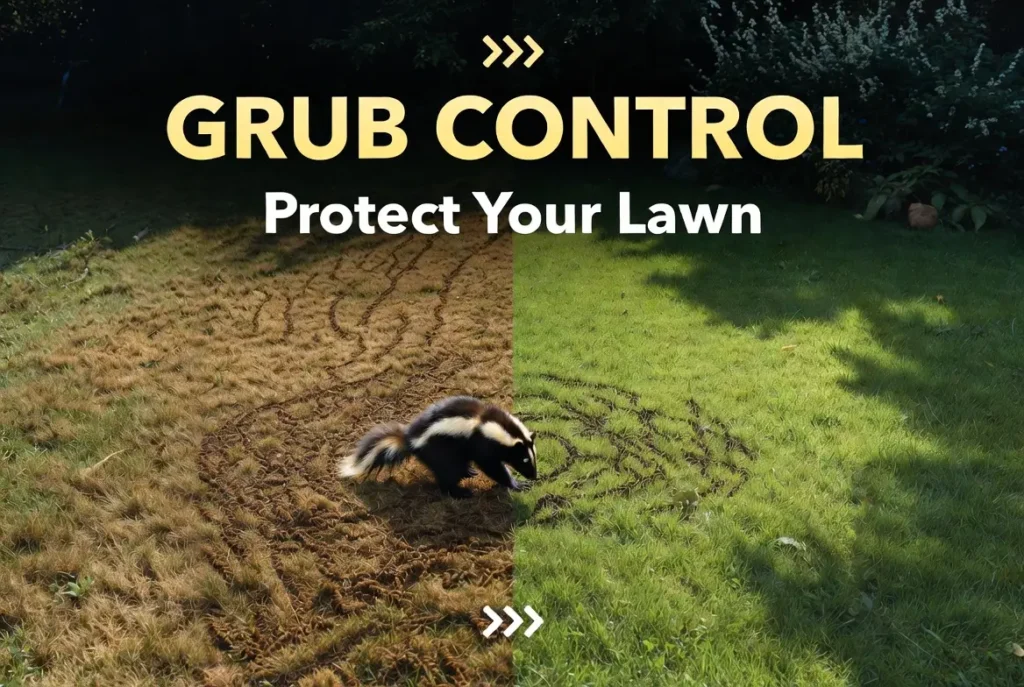
Why Are Animals Digging Up My Lawn?
One common sign of grub problems is increased wildlife activity. Animals love grubs. They are an easy food source.
You may notice:
- Skunks digging small holes
- Raccoons pulling up grass
- Birds searching through your lawn
Unfortunately, these animals often create additional lawn damage while looking for their meal.
How Many Grubs Are Too Many?
Finding a few grubs does not always mean you have a serious problem. Healthy soil naturally contains insects.
The concern is when grub numbers become high enough to damage the grass roots.
If you find many grubs in a small section of soil along with visible lawn damage, it may be time to take action.
How to Prevent Grub Damage in Michigan
Grub control is only one part of lawn protection. A healthy lawn is better prepared to handle insect problems.
Here are some helpful lawn care habits:
Water Properly
Deep watering encourages stronger roots. Strong roots help grass recover from stress. Avoid watering lightly every day. Instead, water deeply when your lawn needs it.
Mow at the Correct Height
Cutting grass too short weakens the lawn. Longer grass helps protect the soil. It also encourages deeper root growth.
Fertilize Properly
A properly fed lawn grows stronger. Use fertilizer based on your grass type and seasonal needs. Avoid over-fertilizing. Too much fertilizer can create other lawn problems.
Remove Lawn Stress
Compacted soil, weeds, and poor drainage can weaken grass. Addressing these issues creates a healthier lawn overall.
Don’t Forget About Pet Waste and Lawn Health
Many homeowners focus on insects and weeds but overlook another common lawn problem. Pet waste. Dog waste left on grass can create brown spots and damage the lawn.
Regular cleanup helps keep your yard healthier and makes it easier to notice problems like grub damage.
For homeowners looking for help keeping their yard clean, you can learn more about pet waste removal at DoesYourDogPoopInYourYard.com.
Keeping your lawn free from waste, pests, and weeds creates a healthier outdoor space.
Can You Fix Lawn Damage After Grubs?
Yes. Many lawns can recover. The first step is controlling the grub problem.
After that, damaged areas may need:
- Raking away dead grass
- Adding grass seed
- Adding soil or compost
- Regular watering
- Proper maintenance
Fall is often a good time for lawn repair because cooler temperatures help new grass establish.
Common Grub Control Mistakes
Many homeowners make simple mistakes when dealing with grubs.
Some common problems include:
- Treating too late
- Applying products incorrectly
- Ignoring early warning signs
- Overwatering damaged areas
- Assuming every brown patch is caused by grubs
Proper identification is important. Not every lawn problem is caused by insects.
When Should You Call a Professional?
Some grub problems are easy to manage. Others require more experience.
If your lawn has large damaged areas, repeated grub problems, or ongoing insect issues, professional help may save time and money.
A lawn care professional can inspect your property. They can identify the cause of the damage. They can also recommend the right treatment schedule.
Apply Grub Treatment Before Damage
The best time to apply grub control in Michigan is before grubs become a major problem.
For most homeowners, late spring through early summer is the ideal prevention window.
Waiting until your lawn is already damaged can make recovery more difficult.
By paying attention to timing, maintaining healthy grass, and taking action early, you can protect your lawn from grub damage.
A little prevention now can help you enjoy a greener, healthier yard all season long.
Are Grubs Damaging Your Michigan Lawn?
Brown patches, loose grass, and animal digging can all be signs of a grub problem. Don’t wait until your lawn needs major repairs. Get help protecting your yard before the damage spreads.
Ready for a healthier, greener lawn?
Call 313-351-3353 TodayContact us today to learn how professional lawn care can help prevent grub damage and keep your yard looking its best.