Need Safe Grub Control for Your Lawn?
Protect your grass without putting your pets at unnecessary risk.
Call 855-316-9164If you’re searching for a dog safe grub killer, you’re probably dealing with two problems at the same time: a damaged lawn and concern about what you’re putting into your yard around your pets.
That’s the challenge many homeowners run into. They notice brown patches, soft spots in the lawn, or increased digging from animals, then discover grubs are the real issue. The problem is that a lot of traditional grub control products contain chemicals people don’t feel comfortable using around dogs.
And honestly, that concern is valid.
Dogs spend a lot of time in the yard. They roll in the grass, dig in the soil, chew on random things they shouldn’t, and track lawn treatments back into the house. Using the wrong grub killer can create unnecessary risks if you’re not careful.
The good news is that there are safer approaches to grub control that can help protect your lawn while still keeping your pets safer in the process.
What Are Lawn Grubs?
Grubs are the larvae of beetles, most commonly Japanese beetles, June bugs, and chafer beetles. They live underground and feed on grass roots.
At first, you may not even realize they’re there. But over time, the damage becomes noticeable.
The lawn may start developing brown or thinning areas that don’t improve with watering. Grass can feel loose or spongy when you walk on it because the roots underneath have been eaten away.
In many cases, homeowners first notice the problem because animals begin digging up the yard looking for food. Raccoons, skunks, and even birds will tear into grub-infested lawns searching for an easy meal.
Dogs sometimes start digging more too because they can smell activity underground.
Why Traditional Grub Killers Worry Pet Owners
A lot of older grub treatment products rely on harsh pesticides designed to kill insects aggressively. While many are considered “safe when used correctly,” that doesn’t always give pet owners much peace of mind.
The concern usually comes down to exposure.
Dogs walk directly on treated grass. They lick their paws afterward. Some dogs eat grass constantly no matter how much you try to stop them.
If treatments are applied improperly or used too heavily, it increases the risk of irritation or accidental exposure.
That’s why many homeowners specifically search for a dog safe grub killer instead of simply buying the strongest product they can find at a hardware store.
They want the lawn fixed without creating another problem.
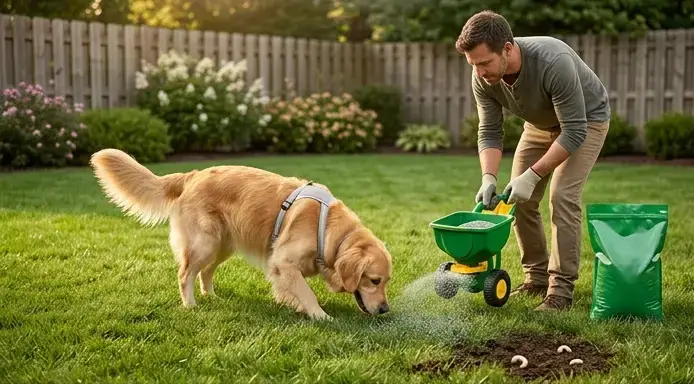
Signs You Might Have a Grub Problem
Before treating the lawn, it helps to know whether grubs are actually the issue.
Some common signs include:
- Brown patches that don’t improve with watering
- Grass that lifts easily from the soil
- Increased digging from skunks or raccoons
- Birds constantly pecking at the lawn
- Spongy-feeling turf
- Grass dying in irregular patterns
One of the easiest ways to check is by pulling back a small section of grass near damaged areas. If grubs are present, you’ll usually find white, C-shaped larvae just below the surface.
A few grubs are normal in almost every lawn. The problem starts when populations become large enough to damage the root system significantly.
What Makes a Grub Killer “Dog Safe”?
No lawn treatment should ever be treated casually around pets, but some approaches are far safer than others.
Generally, pet safer grub control focuses on lower-toxicity ingredients, targeted application methods, and proper drying or watering procedures after treatment.
Many homeowners are now choosing biological or reduced-risk options instead of older broad-spectrum insecticides.
Certain treatments use naturally occurring bacteria or organisms that target grubs specifically while having much lower risk profiles for pets and wildlife.
Timing also matters. Applying products correctly and allowing them to fully absorb into the soil before letting dogs back into the yard greatly reduces unnecessary exposure.
Natural and Pet Safer Grub Control Options
One of the most common pet safer options involves beneficial nematodes.
These microscopic organisms naturally hunt and kill grubs underground without relying on harsh chemicals. They’re widely used in organic and pet-conscious lawn care programs because they specifically target soil pests while being far safer for animals and humans.
Another option involves milky spore treatments, which specifically target Japanese beetle larvae over time. These treatments usually take longer to establish but can provide long-term control in some lawns.
There are also reduced-risk commercial products designed for residential lawns where pets are present. These should still be applied carefully and according to label directions, but they’re often considered safer than older high-toxicity treatments.
The important thing is understanding that “safe” does not mean “careless.” Even safer lawn products should be used responsibly.
Why Overusing Lawn Chemicals Creates Bigger Problems
One mistake homeowners make is applying multiple treatments too close together because they panic when they see lawn damage.
That can actually make things worse.
Overtreated lawns often become stressed chemically, especially during hot summer months. Grass weakens further, soil health declines, and runoff issues increase after heavy rain.
Some homeowners unknowingly combine weed killers, fertilizers, insecticides, and grub treatments all at once without realizing how much chemical load the lawn is absorbing.
For households with pets, this becomes even more important to avoid.
A targeted treatment plan is usually far more effective than dumping multiple products onto the yard hoping one works.
When Grub Damage Becomes Severe
Sometimes homeowners don’t catch the problem early enough.
By the time treatment starts, large sections of grass may already be dead or separating from the soil completely.
In severe infestations, grub control alone may not fully solve the issue because the root system has already been destroyed.
At that point, lawn repair may also be necessary. That can include reseeding, patch repair, soil improvement, or partial lawn replacement depending on the extent of the damage.
The earlier grubs are addressed, the easier and less expensive recovery usually becomes.
Why Dogs Often React to Grub-Infested Lawns
Many homeowners notice their dogs suddenly becoming obsessed with certain areas of the yard during grub infestations.
Dogs can smell activity underground surprisingly well. They may start pawing, digging, or sniffing areas where grubs are concentrated.
Unfortunately, digging behavior can quickly make lawn damage worse.
The combination of root destruction underneath and digging from above often accelerates the decline of the turf significantly.
That’s another reason early grub control matters. The longer the infestation remains active, the more secondary damage tends to happen.
Prevention Is Easier Than Recovery
Preventative grub control is usually far easier than trying to repair a heavily damaged lawn later.
Healthy lawns are naturally more resilient to grub activity in the first place. Proper watering, mowing height, and soil health all help reduce stress that makes lawns vulnerable.
Preventative pet safer treatments applied at the right time of year can also reduce the likelihood of large infestations developing.
Most grub problems become expensive when homeowners wait until the lawn is already severely damaged before taking action.
Choosing the Right Approach for Your Yard
Every lawn is different.
Some yards only need light preventative treatment. Others already have active infestations requiring more aggressive management.
The key is balancing effectiveness with pet safety.
If dogs regularly use the yard, avoiding unnecessarily harsh products makes sense. That doesn’t mean ignoring the problem entirely—it means choosing smarter treatment methods and applying them properly.
For homeowners looking for safer lawn treatment options around pets, this guide on pet safe grub control covers additional strategies for keeping lawns healthier while minimizing risks around dogs.
Solving Problems With Grub Killer
Searching for a dog safe grub killer usually means you’re trying to solve two problems at once: protecting your lawn and protecting your pets.
The good news is you don’t necessarily have to sacrifice one for the other.
Safer grub control options exist, including biological treatments, reduced-risk products, and preventative lawn care strategies that can help manage infestations without relying heavily on harsh chemicals.
The most important thing is avoiding panic treatments and choosing a targeted approach that fits both your lawn conditions and your household.
A healthy lawn matters—but so does knowing your dog can safely enjoy it afterward.
Dog Safe Grub Killer Solutions
Pet-friendly grub control services for healthier lawns and safer outdoor spaces.
Schedule Service – 855-316-9164