Are Brown Patches Taking Over Your Lawn?
Grubs, weeds, and other lawn problems can quickly turn a beautiful yard into a frustrating mess. Let our experienced team help identify the problem and recommend the right solution.
Ready to bring your lawn back to life?
Call 855-316-9164 TodayContact us today to schedule a lawn evaluation and learn how we can help keep your grass healthy all season long.
You spend time watering your lawn.
You mow it every week.
You fertilize it.
Then one day, you notice brown patches spreading across the yard.
At first, you may think it’s caused by the summer heat.
Or maybe your lawn needs more water.
But the real problem could be hiding just below the surface.
Grubs.
These small insects can cause major damage before you ever see them.
The good news is that if you catch the problem early, you can often prevent serious lawn damage.
Let’s look at why grubs destroy lawns, how to recognize the warning signs, and what you can do about them.
What Are Grubs?
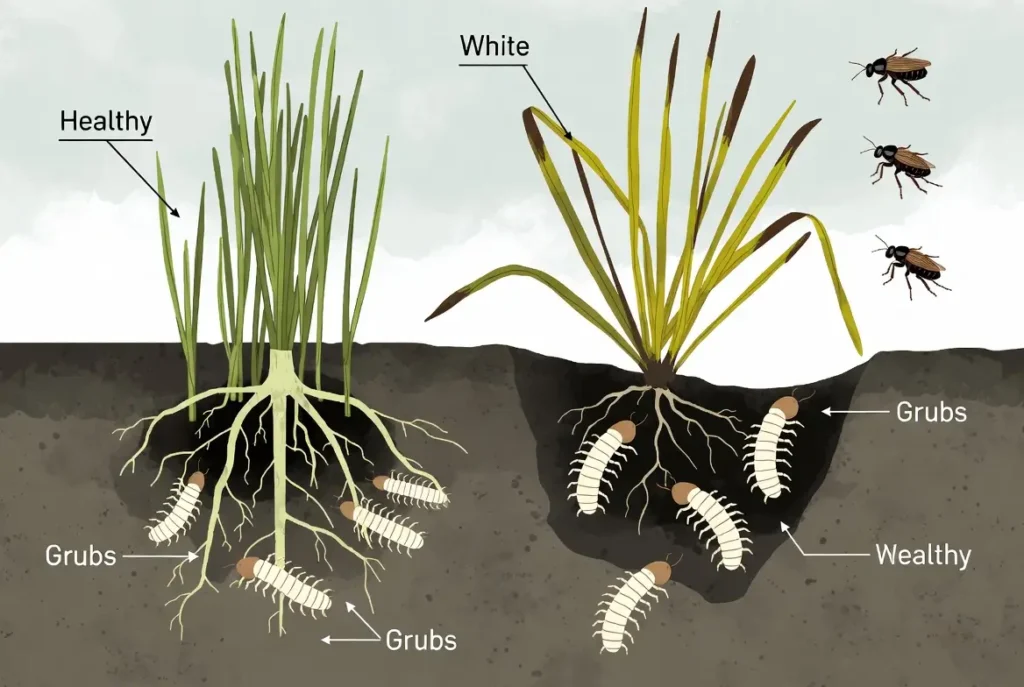
Grubs are the larvae of several types of beetles.
After adult beetles lay eggs in the soil, the eggs hatch into white, C-shaped larvae.
These larvae live underground.
While they’re there, they feed on the roots of your grass.
Without healthy roots, grass cannot absorb enough water and nutrients.
Eventually, the lawn begins to die.
Why Are Grubs So Bad for Lawns?
Grass depends on its root system.
The roots anchor the grass in place.
They also collect moisture and nutrients from the soil.
Grubs feed directly on those roots.
As more roots disappear, the grass becomes weaker.
Eventually, entire sections of your lawn may turn brown.
If enough roots are damaged, the grass can no longer survive.
What Does Grub Damage Look Like?
Grub damage often looks similar to drought stress.
That is why many homeowners miss the early signs.
Some of the most common symptoms include:
- Brown patches
- Grass that feels soft under your feet
- Grass pulling up easily
- Thinning areas
- Uneven growth
- Dry-looking spots that don’t improve after watering
If you can lift sections of grass like a loose carpet, grubs may be feeding underneath.
How Can You Tell If You Have Grubs?
One of the easiest ways is to inspect the soil.
Use a shovel to lift a small section of turf.
Look a few inches below the surface.
Healthy lawns may contain a few grubs.
However, finding large numbers in one small area may indicate a problem.
If you’re seeing significant lawn damage along with numerous grubs, treatment may be necessary.
Why Animals Dig Up Lawns With Grubs
Sometimes homeowners notice animals digging holes throughout the yard.
The grass itself isn’t attracting them.
The grubs are.
Animals that commonly dig for grubs include:
- Skunks
- Raccoons
- Moles
- Birds
These animals treat your lawn like a buffet.
Unfortunately, they often create even more damage while searching for food.
When Are Grubs Most Active?
Grub activity changes throughout the year.
Young grubs usually begin feeding after beetle eggs hatch.
They continue feeding as they grow.
Depending on your location and climate, damage often becomes noticeable in late summer and early fall.
However, the timing can vary.
Monitoring your lawn throughout the growing season helps you catch problems early.
Can Grubs Kill an Entire Lawn?
Yes.
Large grub populations can destroy extensive sections of grass.
The longer they feed, the greater the damage becomes.
In severe cases, homeowners may need to reseed or replace parts of the lawn after treatment.
Early detection can prevent many of these costly repairs.
How to Prevent Grub Damage
Preventing grubs is usually easier than repairing a damaged lawn.
Some helpful practices include:
Maintain a Healthy Lawn
Strong grass tolerates stress better.
Water deeply when needed.
Mow at the proper height.
Feed your lawn according to its needs.
Healthy grass recovers more quickly from minor damage.
Monitor Your Lawn
Inspect your yard regularly.
Watch for new brown patches.
Pay attention if animals suddenly begin digging.
The sooner you notice changes, the sooner you can respond.
Apply Preventive Grub Treatments
Preventive grub control products are available for many lawns.
These products work best when applied at the proper time.
Always read and follow the label directions carefully.
If you’re unsure when to apply them, consult a lawn care professional.
How to Treat Existing Grubs
If grubs are already damaging your lawn, treatment may be needed.
The best approach depends on the severity of the infestation.
Options may include:
- Curative grub control products
- Improving lawn health
- Reseeding damaged areas
- Watering properly after treatment
Treating the problem early often produces better results than waiting until the lawn is severely damaged.
Repairing a Lawn After Grub Damage
Once the grubs are controlled, your lawn may still need some attention.
Start by removing dead grass.
Loosen compacted soil if necessary.
Add quality grass seed to thin or bare areas.
Keep newly seeded areas moist until the grass becomes established.
With proper care, many lawns recover well.
Don’t Mistake Every Brown Patch for Grubs
Not every brown lawn has grub damage.
Other common causes include:
- Drought
- Lawn diseases
- Pet urine
- Poor drainage
- Compacted soil
- Heat stress
That is why proper inspection is important before beginning treatment.
Finding the real cause helps avoid unnecessary treatments.
Why Routine Lawn Care Matters
Healthy lawns resist many problems better than neglected ones.
Simple habits can make a big difference.
Water deeply.
Mow regularly.
Sharpen mower blades.
Remove weeds.
Inspect your yard often.
Small maintenance tasks throughout the year help keep your lawn looking its best.
Don’t Forget About Pet Waste
If you have dogs, regular pet waste removal is another important part of lawn care.
Dog waste left on the lawn can damage grass, create unpleasant odors, and make it harder to enjoy your yard.
Keeping your lawn clean allows you to spot problems like grub damage much sooner.
If you’re looking for professional pet waste removal tips or reliable service, visit DoesYourDogPoopInYourYard.com to learn more about keeping your lawn clean and healthy.
When Should You Call a Lawn Care Professional?
Some grub problems are easy to manage.
Others require professional evaluation.
If large brown patches continue spreading despite watering, or if animals keep digging across your yard, professional help may save both time and money.
An experienced lawn care company can determine whether grubs are truly the problem.
They can also recommend the right treatment plan for your lawn.
Grubs Cause Major Lawn Damage
Grubs may be small, but they can cause major lawn damage.
By feeding on grass roots, they weaken your lawn from below the surface.
The earlier you recognize the warning signs, the easier they are to manage.
Watch for brown patches.
Inspect your lawn regularly.
Maintain healthy grass.
Address problems before they become severe.
With consistent lawn care and early action, you can protect your yard from grub damage and enjoy a healthier lawn throughout the growing season.